—By Peter R. Mossback, Athwart Historian.
Leonard Cohen once sang like a man balancing the book of Leviticus on a detonator. “First We Take Manhattan” was never just a pop song; it was a psalm in disguise, a hymn of civilizational infiltration.
In Prophet of Decline, Farrenkopf—reading Spengler with the precision of a cultural pathologist—would recognize it instantly: the Magian spirit humming through a Faustian power grid.
Spengler saw the Jewish, Christian, and Muslim religions as the great expressions of one Magian soul — a consciousness shaped by the desert, inward-turning, revelation-bound. But Christianity, when it entered Europe, did not remain Magian; it was Faustianized. The figure of Christ — who in the East had preached the coming kingdom — became in the West the symbol of infinite striving, of man’s lonely ascent toward God. Where the Magian world saw the universe as a closed vessel of divine mystery, the Faustian saw an open cosmos stretching toward the stars.
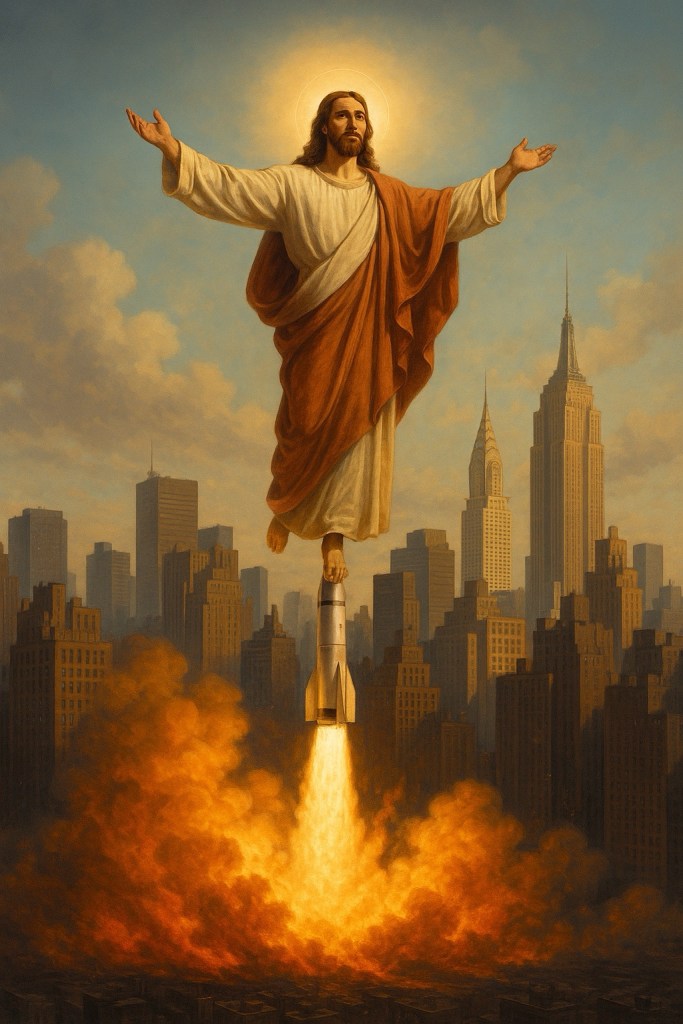
The Faustian Christ departs—rising on the same fire that built the city.
Below, they watch in awe of a brilliance they did not make and cannot sustain.
The builders are gone; the heirs will inherit not the light, but its fire.
Cohen’s refrain — “First we take Manhattan, then we take Berlin” — captures that recurring invasion of forms: the Magian will to unify seeping once again into the Faustian city’s bloodstream. Manhattan is the bazaar of pluralism; Berlin, the temple of thought. Between them hums the circuit of Western civilization, now faintly glowing.
And now the city has chosen its first culturally Muslim socialist mayor — not as an invader, but as a fulfillment. The West, weary of its own centrifugal chaos, has turned back toward cohesion. Bureaucratic compassion, moral certitude, collective order: the Magian values return in secular garb. What began as faith has become policy.
Spengler warned that the West would not perish by conquest but by consent — by its yearning to be whole again. A civilization that once gloried in endless differentiation would, in old age, beg for unity. And that longing — however noble — would dissolve the tension that made it great. The Faustian spirit lives by the horizon; when it seeks the center, it begins to die.
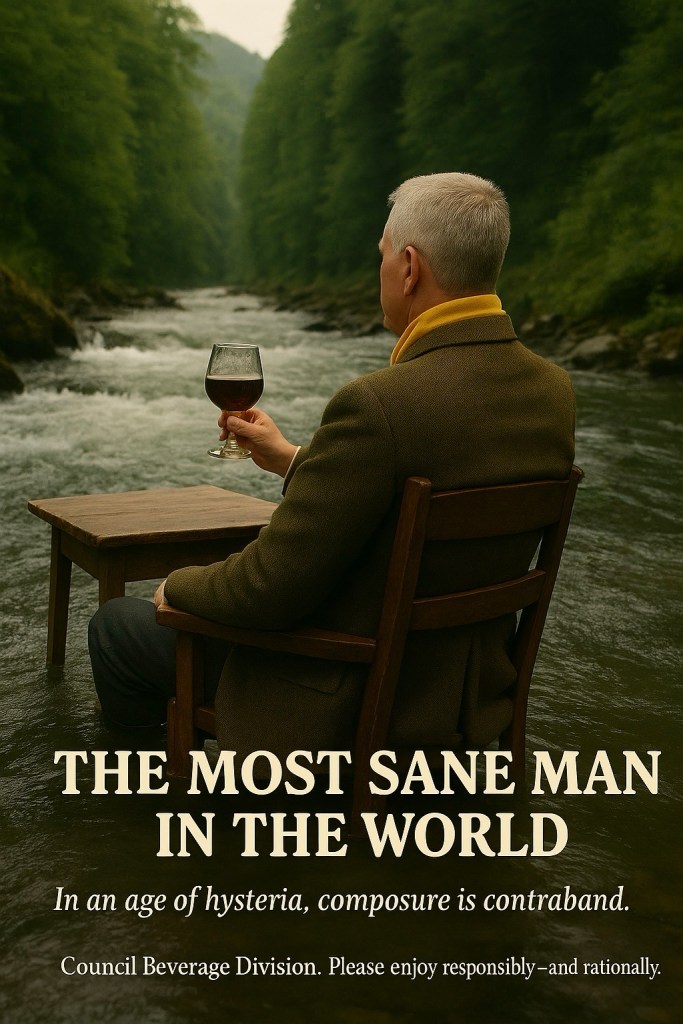
He stayed on the ground while the rockets rose.
His composure has a touch of pazienza in it—the patience of a man who knows the stream’s running the wrong way, but figures someone still has to stand there and face it.
As for the rivalry between Jew and Muslim, Spengler saw no contradiction there. It is the tragedy of resemblance — the quarrel of brothers who worship the same absolute in different syntax. Both are Magian, both seek to bind the infinite into the singular, both believe in history as revelation. Their enmity is proof of their kinship. They wrestle not over truth itself, but over whose language of truth will rule.
Cohen’s narrator, guided by “a signal in the heavens” and “the beauty of our weapons,” speaks the same tongue — the voice of conviction reborn in irony. The signal was never military; it was metaphysical. And the West, which once made faith into exploration, now hears that signal again and mistakes it for progress.
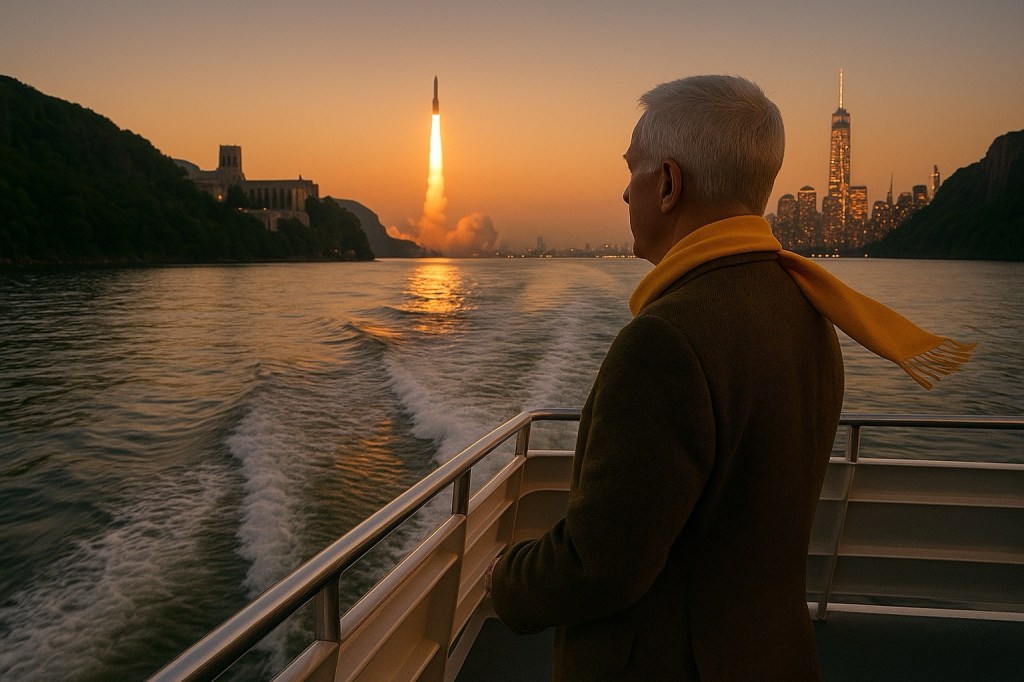
As usual, he’s moving against the flow—putting a safe distance between himself and New York’s next great revelation. The river runs south, the rockets rise West, but Peter keeps to his course: upstream, steady, and sane.


Leave a Reply