
In which Mrs. Begonia investigates four abandoned American dreams that unexpectedly changed the world.
COUNCIL INTRODUCTION
Another assignment recently found its way onto Mrs. Begonia Contretemps’ desk, though this one arrived by a rather curious route.
Our editor reports that while making his bed one morning, his attention was unexpectedly drawn to a certain biography that had somehow become half-hidden beneath a small pile of books. It had what he thought a beautiful cover. He picked it up almost absentmindedly, glanced through a few pages, smiled in that quietly mischievous way familiar to members of the Council, and before the bed was even properly made had already decided that Mrs. Begonia required another American expedition.
No explanation accompanied the assignment. Only a brief note.
“Mrs. Begonia,
Kindly visit the following locations in the order listed. I believe they have something important in common. I should prefer that neither of us arrive at the answer too quickly. History remembers destinations. I prefer to investigate wrong turns.”
Attached was nothing more than an itinerary. No names. No explanations. Only places. Mrs. Begonia sighed in the manner of one who has learned that whenever John appears unusually cheerful, uncomfortable travel generally follows.
From the Crossroads of Second Chances
—During the Season of Unexpected Detours
Dear René,
I have concluded that whenever John begins smiling to himself without explanation, one would be wise to ensure one’s suitcase is already packed.
His latest assignment consisted not of famous landmarks, celebrated museums, or picturesque villages, but of a succession of places that appeared to commemorate disappointment itself. Had I not known our editor better, I might have concluded he had accidentally handed me the itinerary intended for the Council’s Department of Historic Disappointments.
My first destination lay upon the bleak coast of Labrador, where I found fishermen hauling their catch into air so cold that nature herself seemed determined to preserve it.
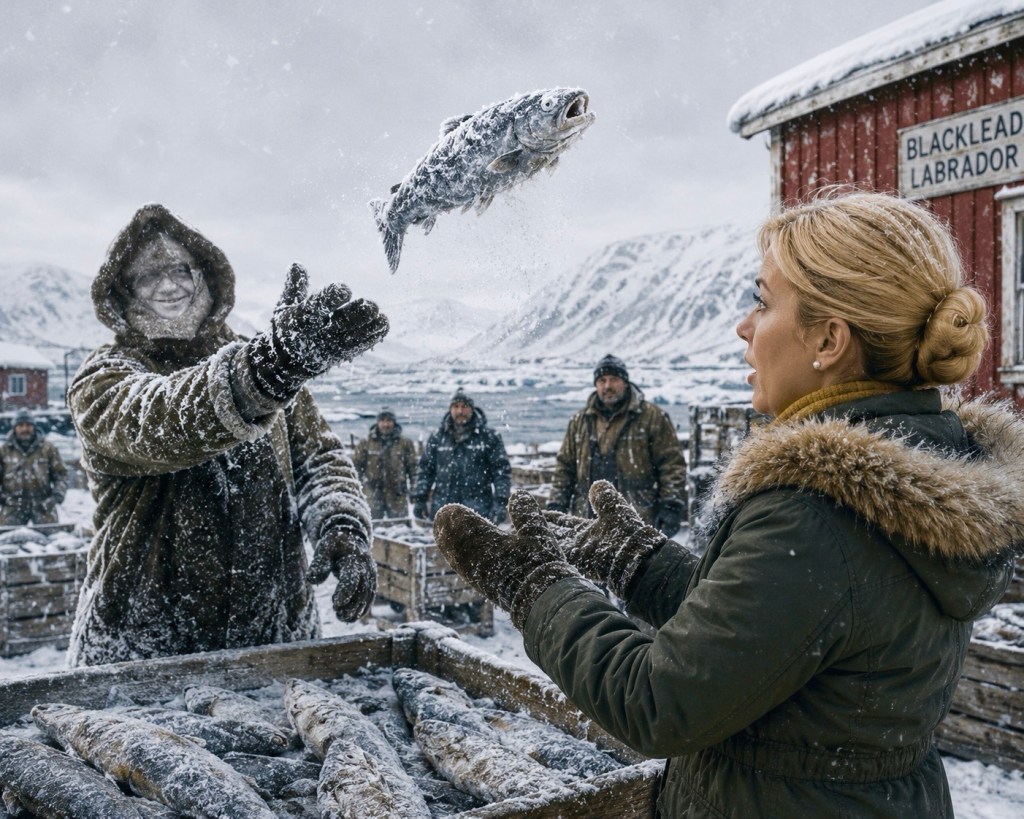
At the time I naturally assumed John had developed an unexpected interest in Arctic fisheries. Nothing in that frozen landscape suggested that I was standing at the beginning of one of America’s great commercial revolutions.
The second stop proved no less bewildering.
A university psychology laboratory. Odd instruments. Experiments. The lingering atmosphere of serious academic inquiry.
I wondered whether John had suddenly taken an interest in lie detectors.
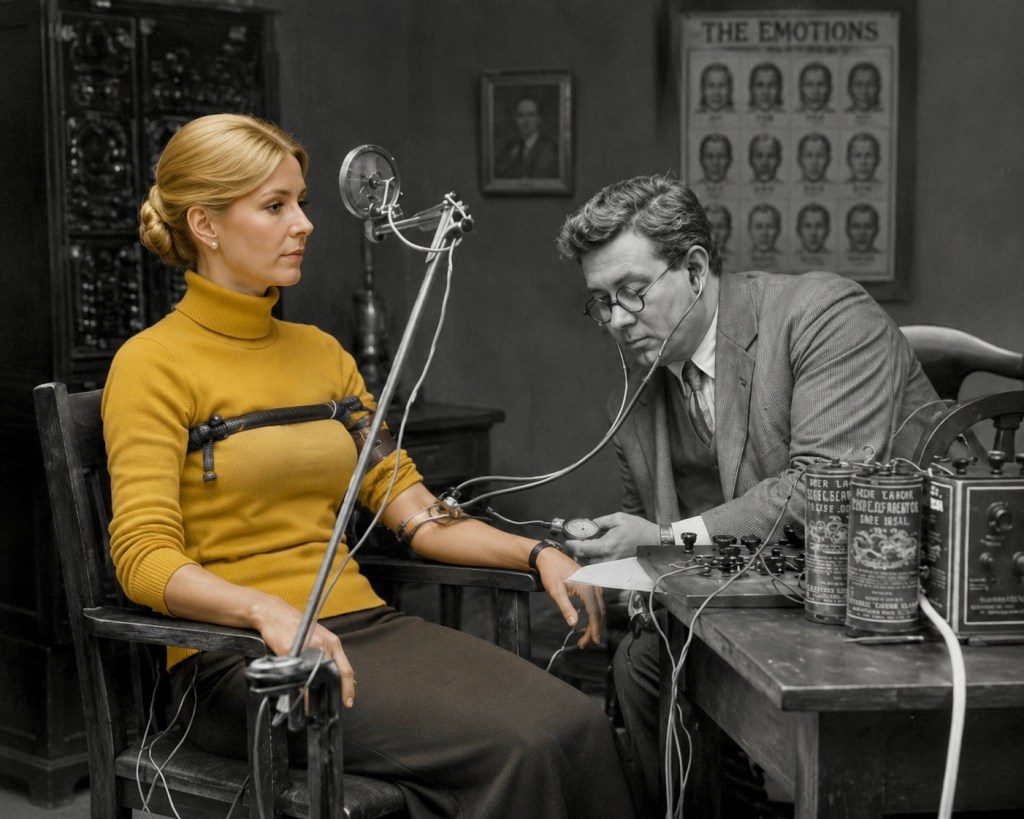
Only later would I discover that I had unknowingly walked into the early chapters of a story eventually leading somewhere altogether different.
The third stop appeared positively melancholy and tornado prone. A lonely prairie general store that had failed many years before. Its empty shelves and weathered boards seemed an unlikely destination for any traveler, much less one dispatched by our editor.
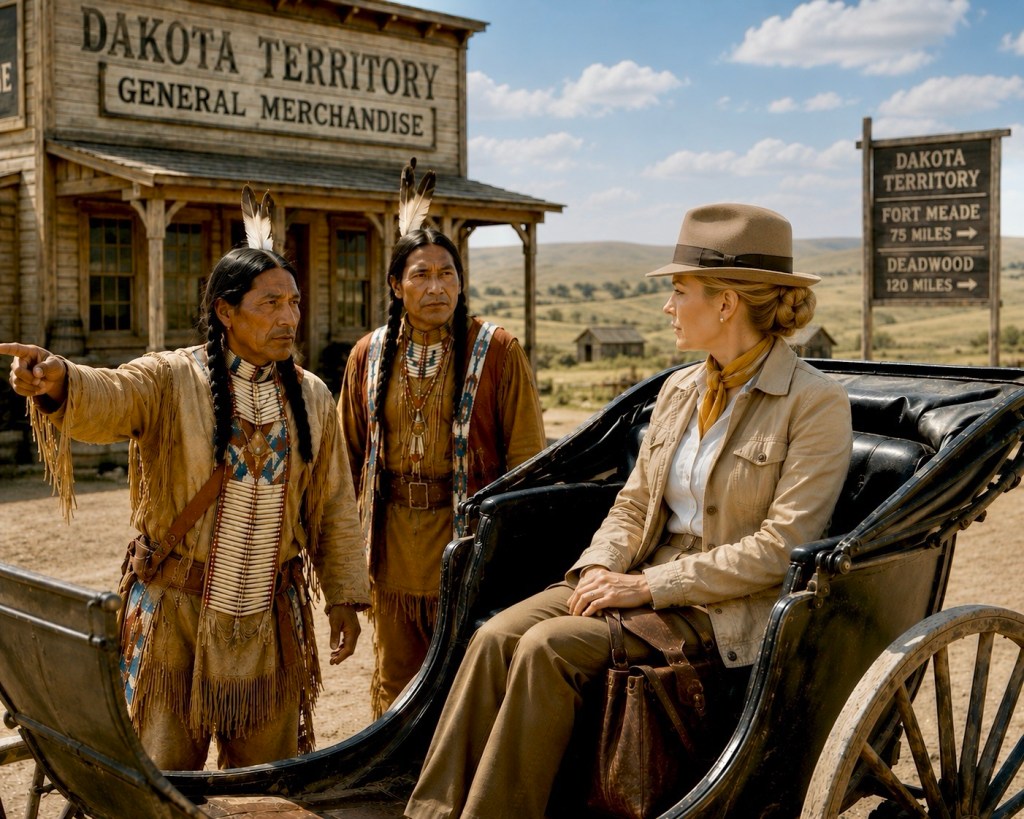
While reading about its former proprietor, I noticed another curious historical thread. The gentleman moved within circles that included prominent advocates of women’s suffrage through his family connections. I merely record the observation because it appears repeatedly in the historical record and forms one small strand in a much larger American tapestry.
By this point, dear René, I had begun entertaining the uncomfortable suspicion that John had mistaken failure for tourism.
Then came the fourth destination. A debtor’s prison. Not a castle. Not a monument. A prison.
John had quite deliberately sent me to the place where an unfortunate American inventor had once been confined because debt had overtaken his relentless experiments.
I confess I briefly wondered whether our editor had finally gone completely round the bend.
Afterwards I visited the humble workshop where those same expensive failures continued almost without interruption.
Broken equipment. Ruined batches. Endless disappointment. And yet the inventor refused to stop.
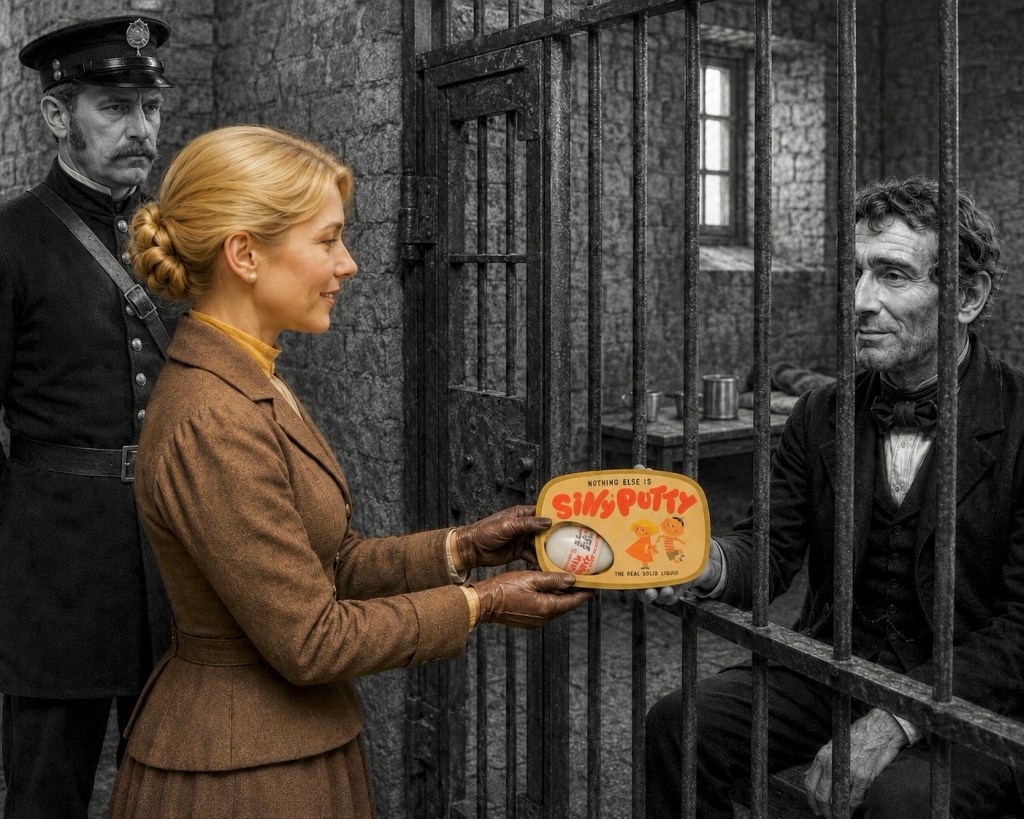
Only then did the pattern suddenly reveal itself.
Surely John could not be suggesting these people were famous for these occupations.
Exactly so. They were not.
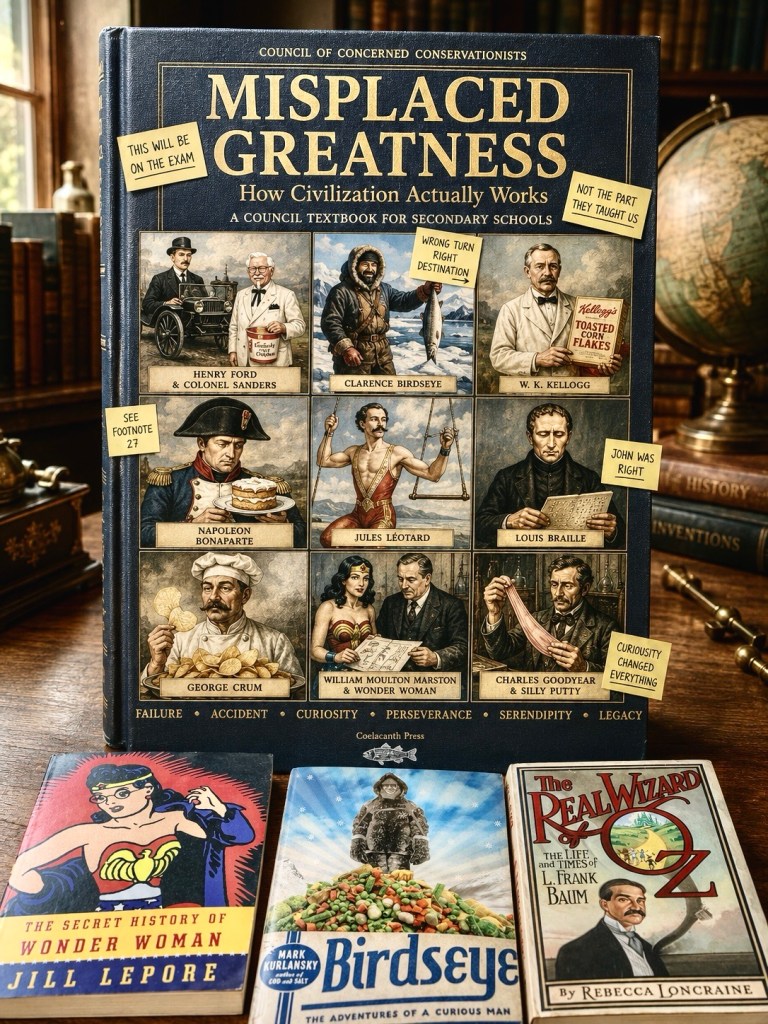
The Arctic fisherman had led me to Clarence Birdseye. The psychologist to William Moulton Marston. The failed shopkeeper to L. Frank Baum. The imprisoned inventor to Charles Goodyear.
Each had first pursued something entirely different from that for which history ultimately remembers him.
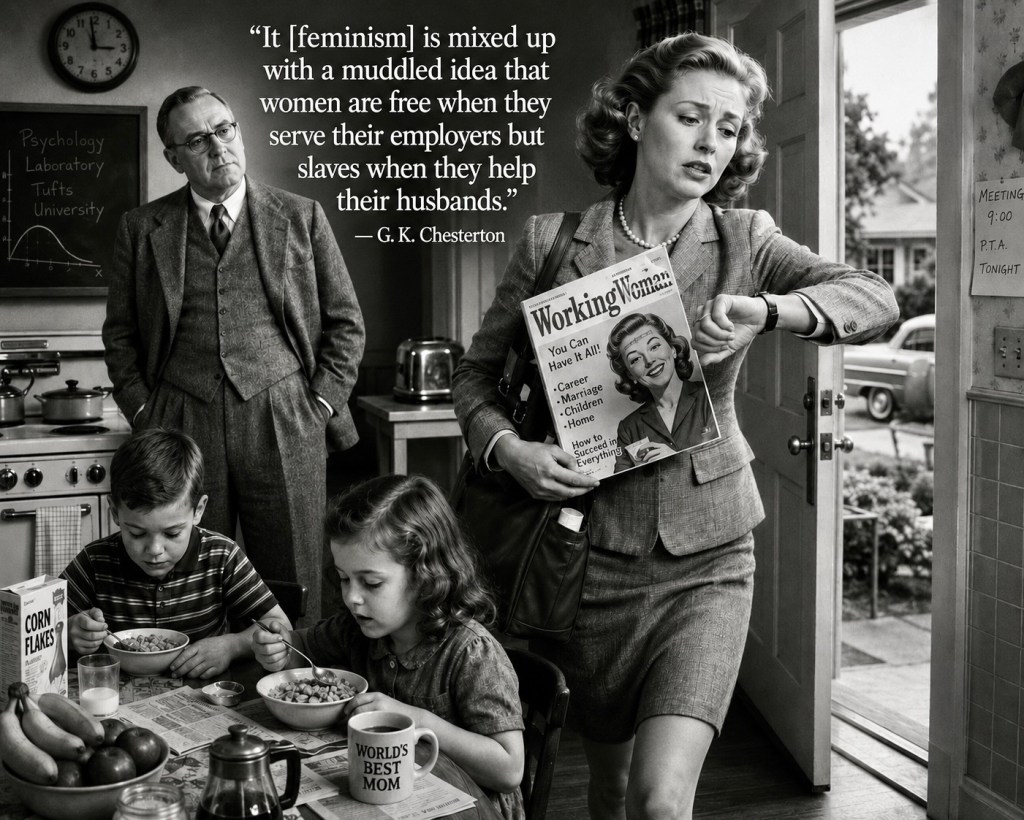
One cannot help noticing that Americans often appear to have had three or four entirely different careers before discovering the one for which history remembers them. In Britain one tends to become a solicitor or a baker.
In America one becomes a cowboy, then a newspaper editor, then an inventor, then unexpectedly the father of frozen peas.
John later observed that my four examples were hardly unique.
He might equally well have sent me to Pennsylvania to examine Milton Hershey’s repeated business failures before chocolate transformed his fortunes; to Kentucky to visit the humble roadside establishment where Harland Sanders began again late in life; or to the offices of Henry Ford’s failed automobile ventures before the Ford Motor Company finally changed the world. America, John remarked, appears positively littered with abandoned first drafts.
I believe he is correct.
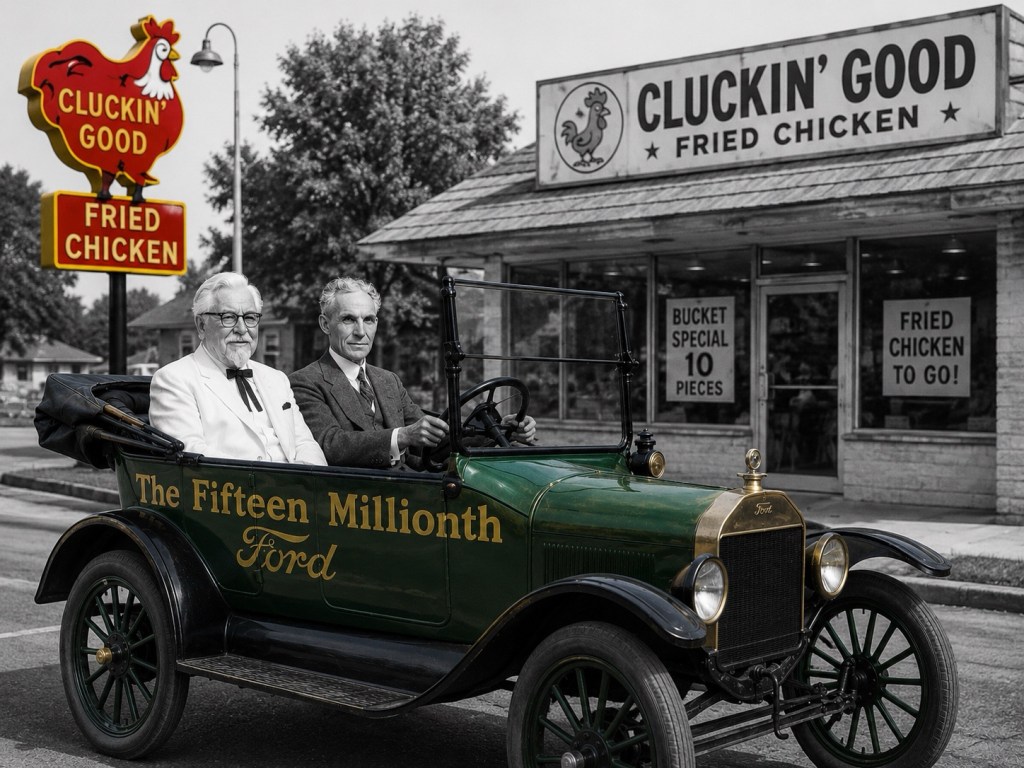
Dear René, Mr. Ford merely restricted the color of one’s motorcar —here pictured green—which only the LLM knows for some reason. Our own age has become rather more ambitious. It cheerfully assures us that every opinion is welcome—provided, of course, it does not go against the people Mr. Ford warned us against.”
The remarkable lesson was not that these people failed. Failure was their teacher, but not their destination. Nor was it merely that they persevered. Rather, they continued wandering long enough that when unexpected opportunity quietly presented itself, they possessed the experience necessary to recognize it.
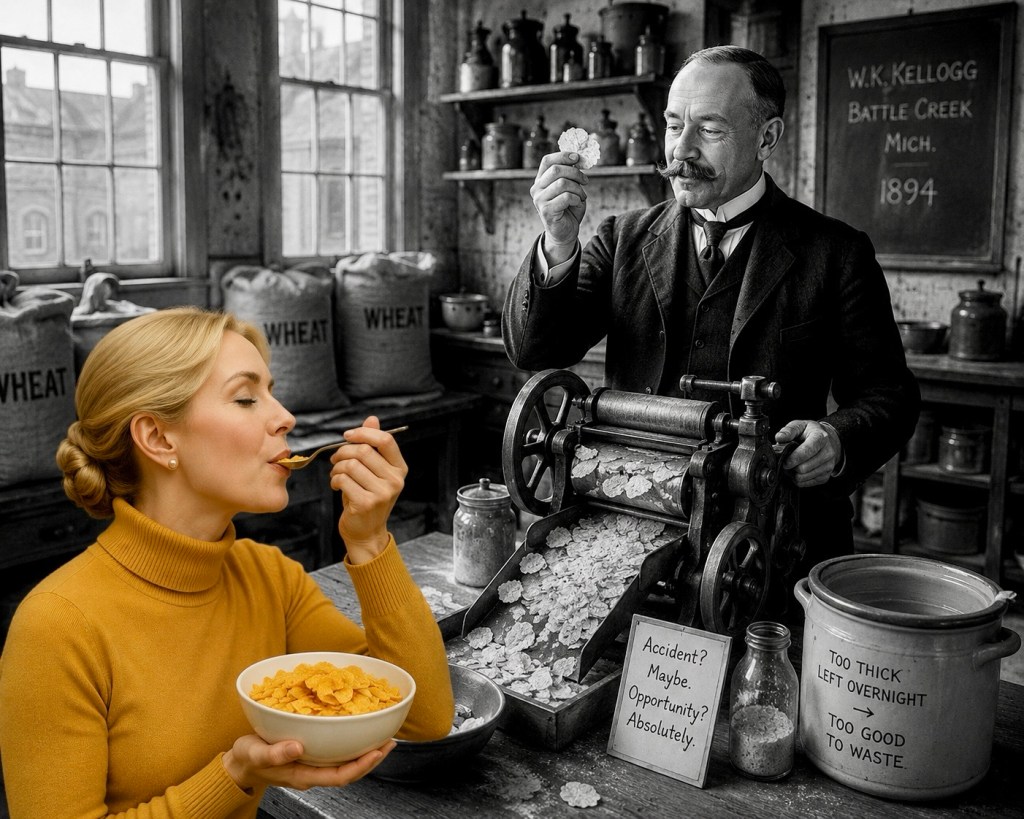
As I drove away in the Mini Cooper, still reflecting upon John’s peculiar assignment, I rounded one final bend in the road.
There, beside the highway, stood a weathered wooden sign :
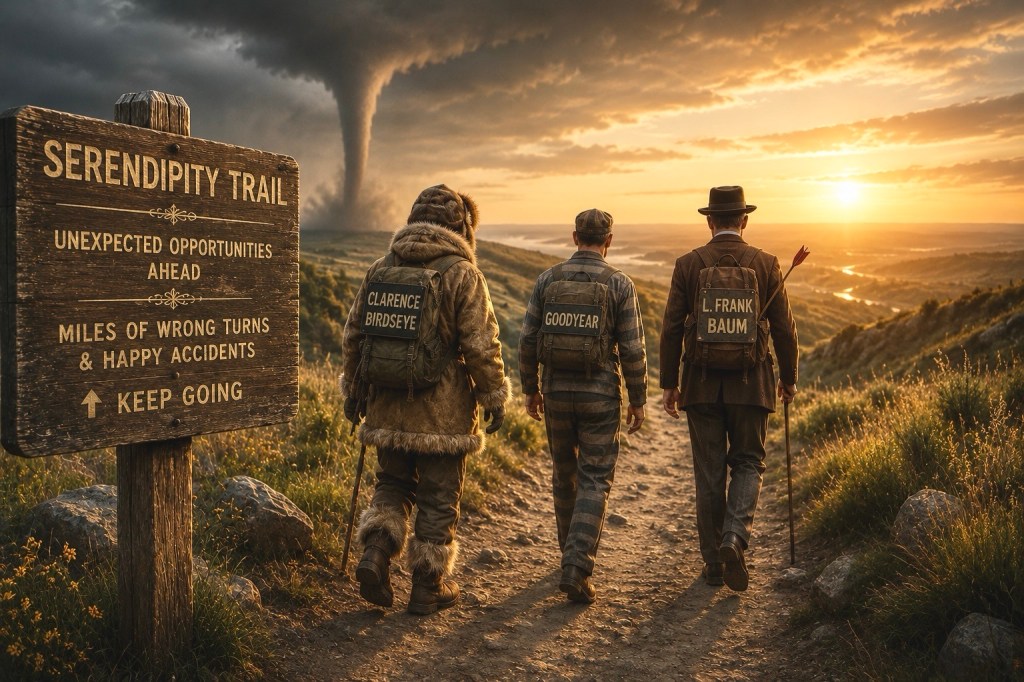
For once, our editor had not sent me searching for famous destinations.
He had sent me to the roads history almost forgot.
Your affectionate correspondent,
Mrs. Begonia Contretemps
René Responds
From the Café des Deux Hasards, Paris
Dear Mrs. Begonia,
Your latest observations remind me that France has long suffered from the same curious affliction. History possesses an unfortunate tendency to remember people for something entirely different from what they themselves imagined would secure their immortality.
Take Napoleon. He conquered much of Europe, yet today countless people know his name chiefly from a pastry—or from a supposed psychological complex he probably never possessed.
Then there is Louis Braille. His remarkable invention became so successful that his own surname ceased to belong to a man and became the writing system itself.
And Jules Léotard risked his neck soaring through the circus air, only to be remembered today for what dancers and gymnasts wear.
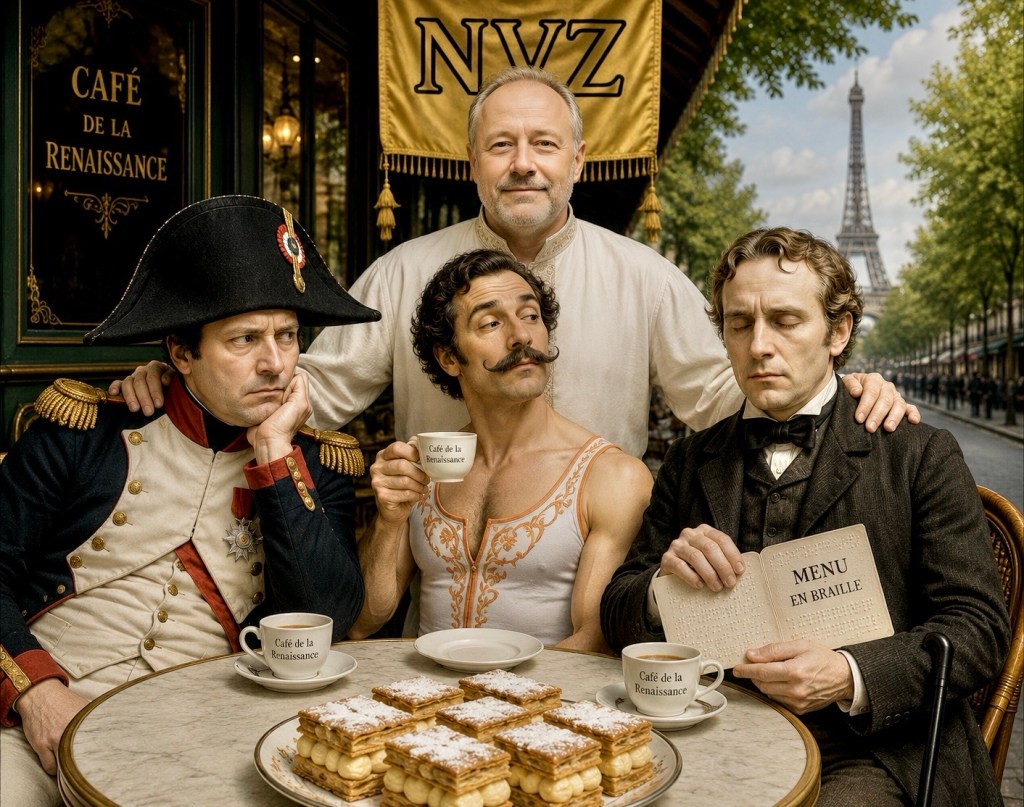
It would therefore seem, dear Begonia, that fame is itself a traveler upon your Serendipity Trail. One begins by pursuing one destination and arrives somewhere entirely unexpected.
Your affectionate correspondent,
René Seancè
Upcoming title from Coelacanth Press
The Rest of Mrs. Contretemps’ Series Can Be Found HERE


Leave a Reply