Editor’s Note: Our regular Words in the Wild correspondent, Paige Turner, is away on a research fellowship at the Institute for Tomorrow Studies, where she is auditing the future and cataloging the books everyone fully intends to read someday. Since this installment’s specimen in the wild—“back in the day”—happens to fall squarely within Justin Aldmann’s field of interest, he has kindly agreed to mind the Words in the Wild desk until her return.
—“Back in the Day”—
By Justin Aldmann
“The future ain’t what it used to be.”
—Yogi Berra
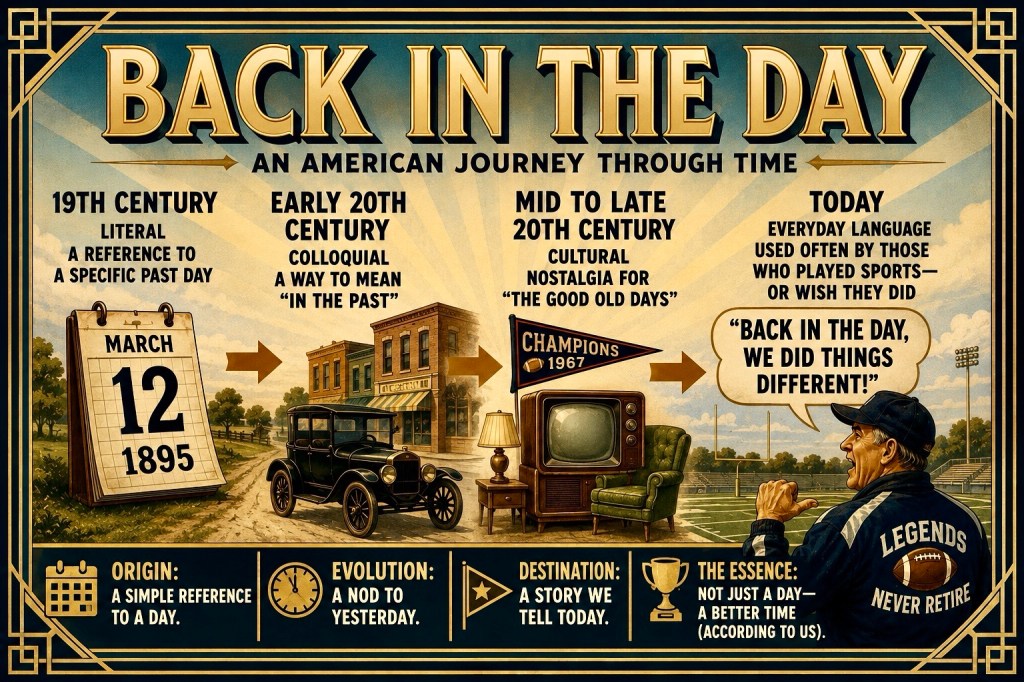
There are expressions that merely become popular, and then there are expressions that breed indiscriminately. “Back-in-the-day” belongs to the latter category. Once you begin noticing it, you hear it everywhere. Television interviews. Podcasts. Family reunions. Hardware stores. Coffee shops. The fellow behind you in line at the pharmacy. Apparently, everyone once lived in a mythical province known only as The Day.
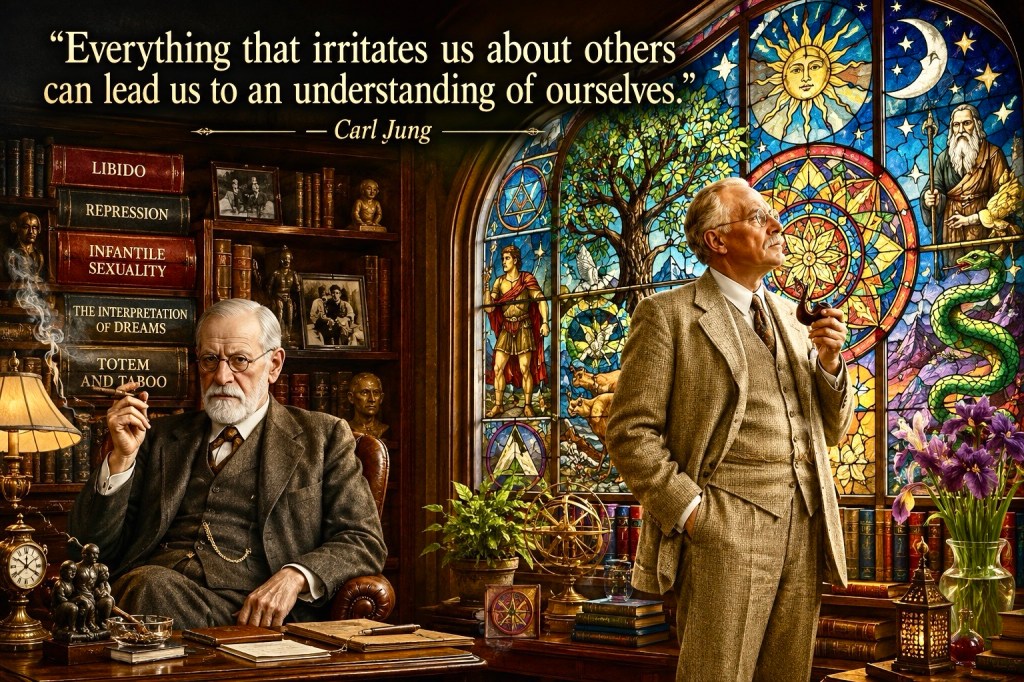
The phrase back-in-the-day has always irritated me to no end. Not because I object to memory. Quite the contrary. I enjoy history immensely. I simply dislike the assumption that there was one glorious, vaguely defined era to which we all secretly belong. Every speaker seems convinced that his day was somehow the day. As though history itself had reached perfection just as he happened to be twenty-three.
The Germans, naturally, have a word that sent me in another direction: Sehnsucht.
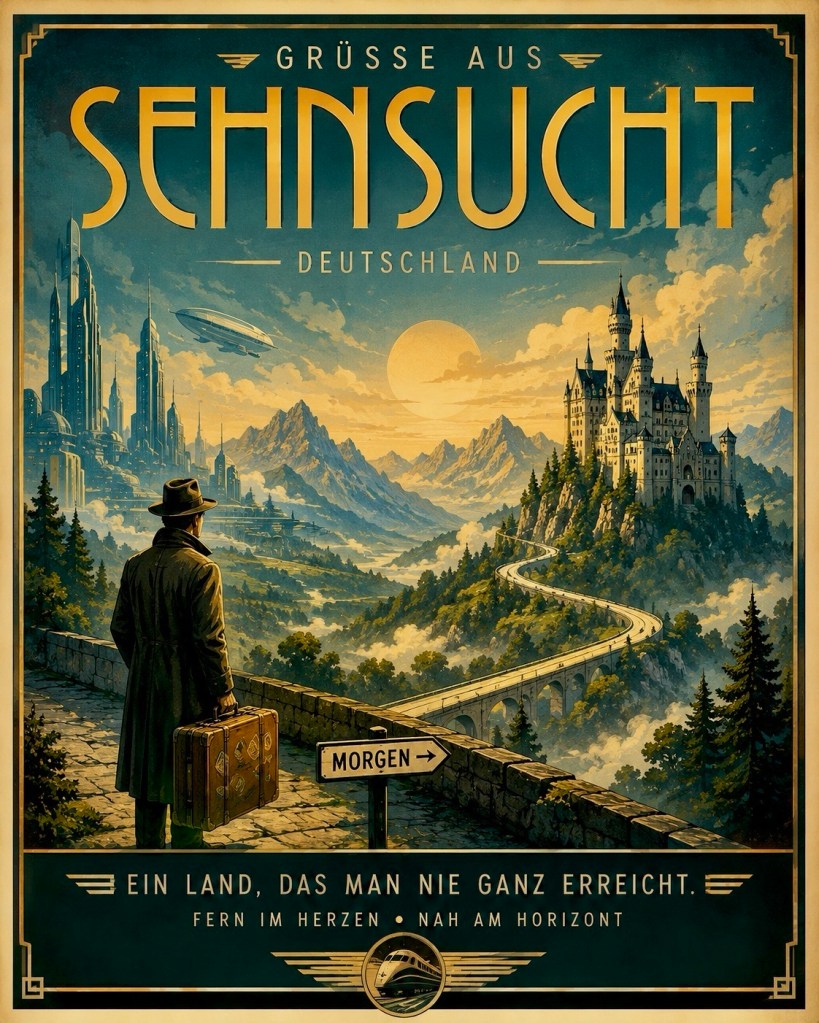
It is one of those nearly untranslatable terms for a profound longing toward something distant, incomplete, or perhaps never fully attainable. Not homesickness exactly. More like a love affair with the horizon.
German, of course, has an alarming habit of manufacturing compound words with the confidence of an industrial machine. In that spirit, permit me to coin one of my own: Rückblicksucht—a compulsive longing to keep looking backward. Whether an actual German would recognize it, I cannot say. I rather hope he would smile.
Perhaps that, too, is one of life’s quieter pleasures: crossing a linguistic border. One doesn’t cross into another language merely to borrow a word. One crosses to discover that another people have noticed something your own language left unnamed.
I have always suspected that I suffer from the opposite instead.
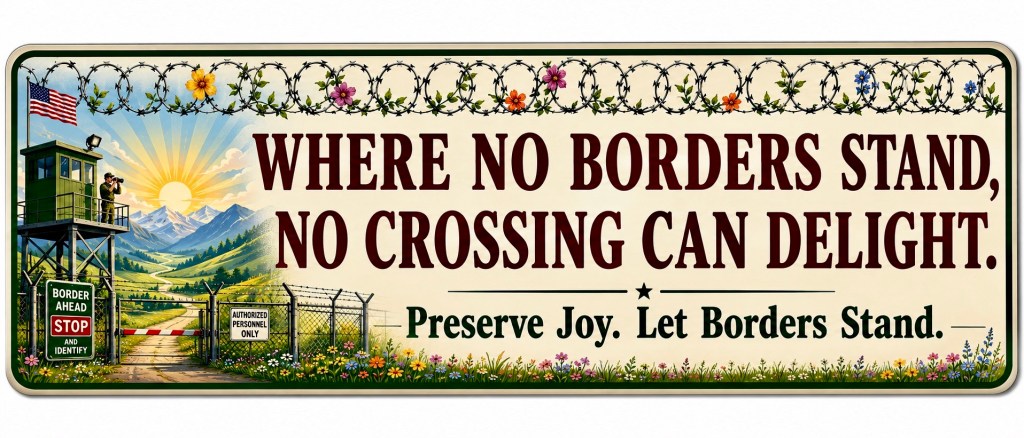
Years ago, while reading Alain de Benoist, I encountered a way of thinking that has stayed with me. He has often written about the importance of boundaries—not merely political ones, but the countless distinctions that give shape and meaning to life. A border is not simply an obstacle. It preserves identity. It tells one thing from another.
Ironically, one of life’s genuine pleasures is occasionally crossing such a border. Not because borders are meant to disappear. Quite the opposite. The crossing is meaningful precisely because the border exists.
There are borders between ignorance and understanding, apprentice and craftsman, one vocation and another, one season of life and the next. The joy is not abolishing them. The joy is discovering that, at the proper moment and for the proper reason, one has crossed one.
Perhaps that explains why I have never been particularly sentimental about “back-in-the-day.” While others seemed content looking over their shoulders, I was forever peering over the next hill. There was always another book to read, another place to visit, another odd corner of civilization waiting to be explored.
Then, rather inconveniently, a disturbing thought occurred to me.
What if these past few years have quietly become. . . my back-in-the-day?
I confess the possibility gave me pause. It lasted nearly forty-five seconds. Then I remembered there are still frontiers ahead of me. Still books unopened. Still questions unanswered. Still borders worth approaching, respecting, and, now and then, crossing. My future, I was relieved to discover, had not quietly slipped into the past after all.
Yet the phrase still irritates me.
The Council therefore recommends that “back in the day” be retired for routine maintenance until further notice. At the end of the day, it has become so overused that, ironically, it now belongs. . . back in the day.
More Words In The Wild can be found: HERE


Leave a Reply