—A WORDS IN THE WILD INSERTION—
A Punctuation Mark Whose Time Has Come.
Guest column by Mrs. Begonia Contretemps, in the continued absence of the vacationing Paige Turner, whose innocence, quite coincidentally, the Council is pleased to have preserved.
Dear Reader,
While our Paige remains away, I have been asked to mind Words in the Wild. I had not expected my first specimen to find me quite this way.
I was reading an essay on Marcion, the second-century Christian heretic who found the created world so imperfect that he could not believe it the work of the highest God.
Among the evidence he offered was this rather startling observation :
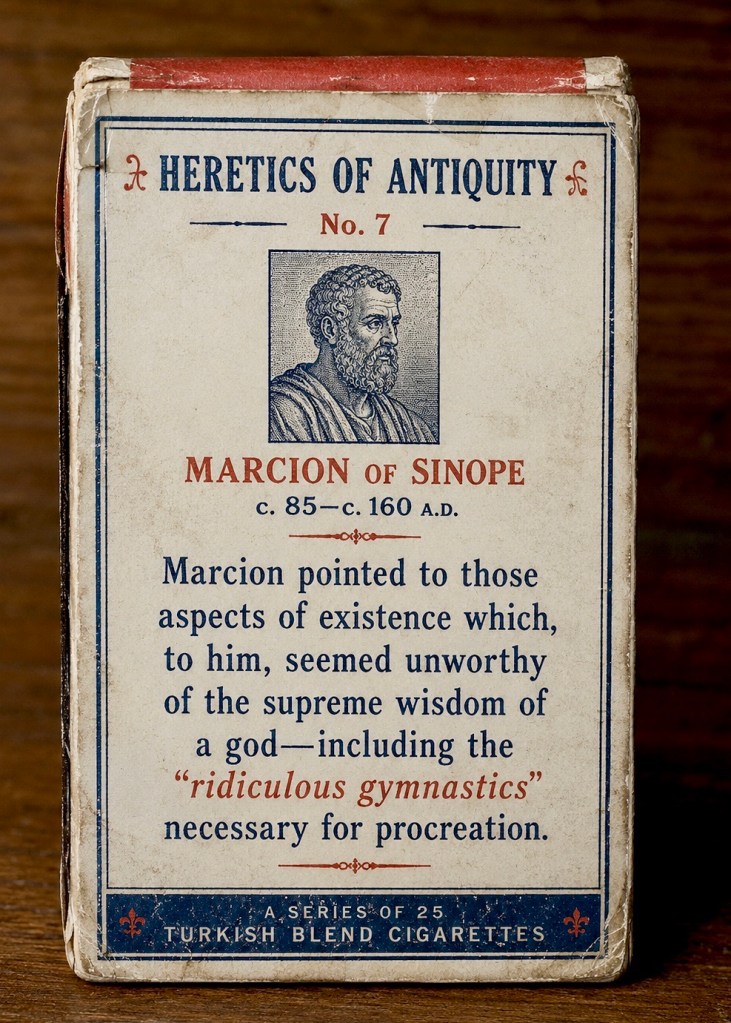
RIDICULOUS GYMNASTICS‽
I beg your pardon.
I have always regarded the arrangements by which living things perpetuate themselves rather differently.
Which brought immediately to mind a scene from Adaptation, in which the orchid hunter John Laroche explains the extraordinary relationship between certain flowers and the insects that pollinate them :
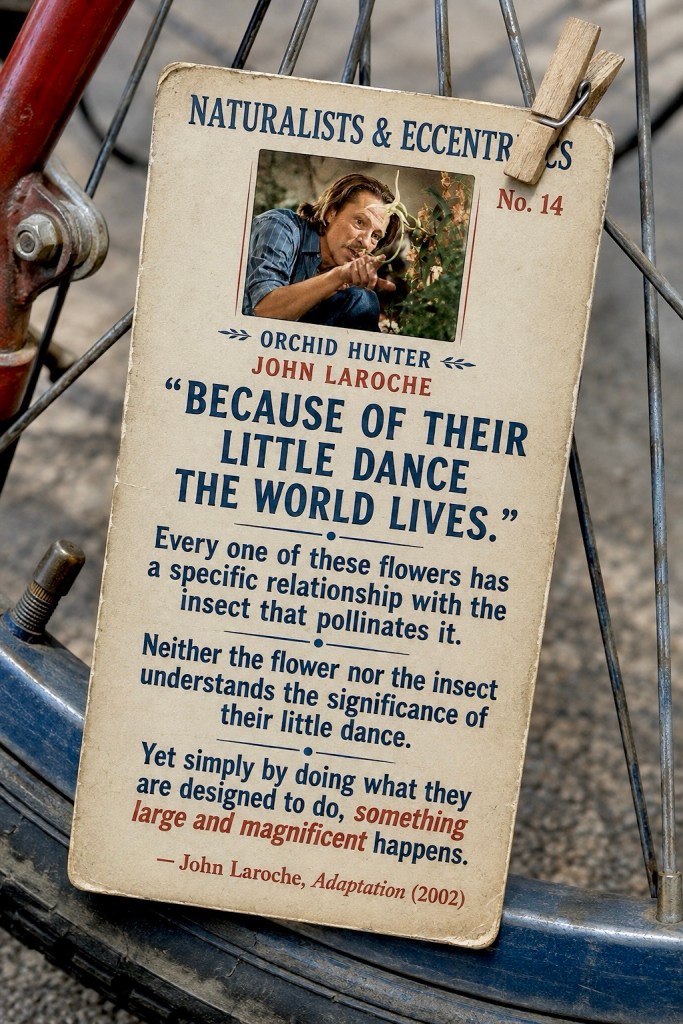
John Laroche said it Precisely.
Neither flower nor insect understands what its little dance accomplishes. Yet by doing what each was made to do, something considerably larger carries on.
Ridiculous‽ No! Magnificent!
And there, quite accidentally, I had stumbled upon our word in the wild. Or rather, our mark in the wild.
The interrobang — ‽.
I confess I rather like the word.
Interrobang.
It has a slightly improper sound to it, does it not? Rather more suggestive of something one ought not inquire about than a respectable item of punctuation.
I shall leave it at that. Mostly.
The interrobang?! was proposed in 1962 by the American advertising executive Martin K. Speckter for precisely those occasions when neither ? nor ! can manage the job alone.
Its name combines interrogation with bang, printers’ slang for the exclamation point. For a brief hopeful period, the interrobang even found its way onto typewriters. Then it largely disappeared. One wonders why.
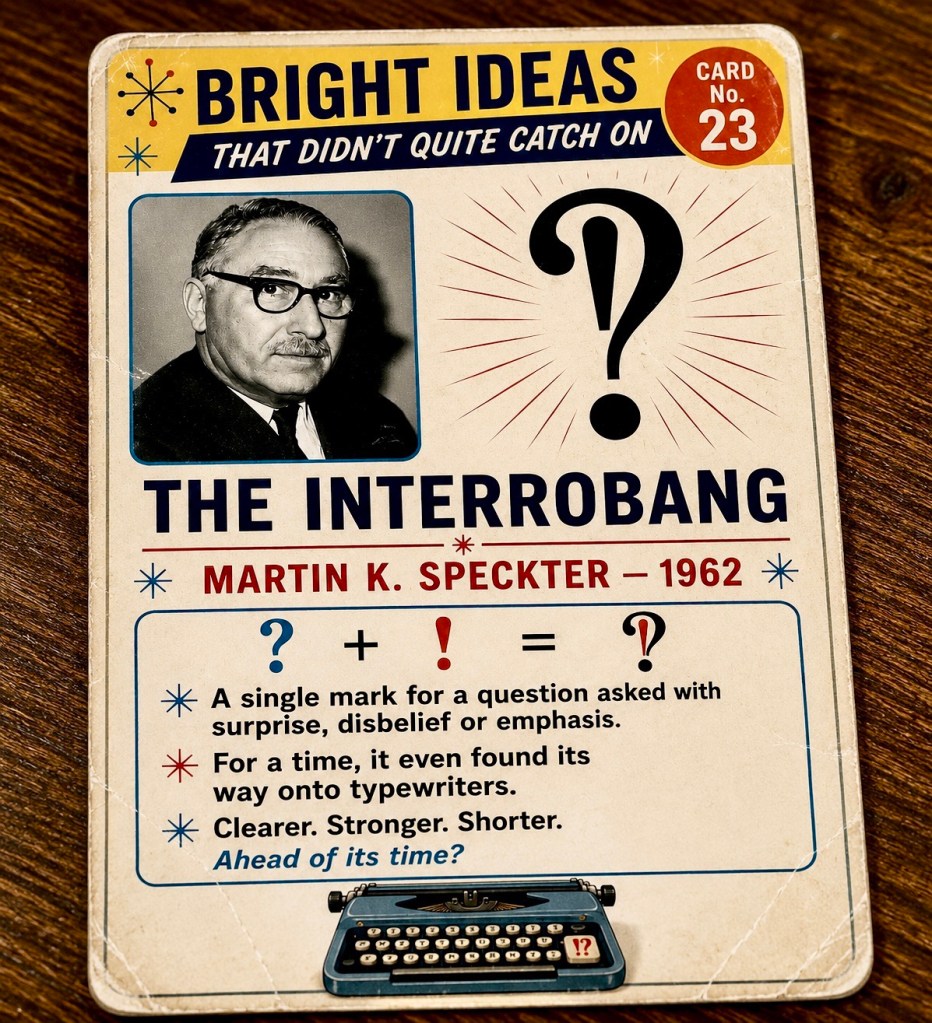
Surely the age in which one encounters a statement and wishes simultaneously to ask “What?” and exclaim “What!” has not passed.
Quite the contrary :

Well, back to the matter at hand. . . Perhaps Mr. Speckter did not invent a punctuation mark that failed.
Perhaps Mr. Speckter had merely invented the punctuation mark for an age that had not yet arrived. It would appear that it has now.
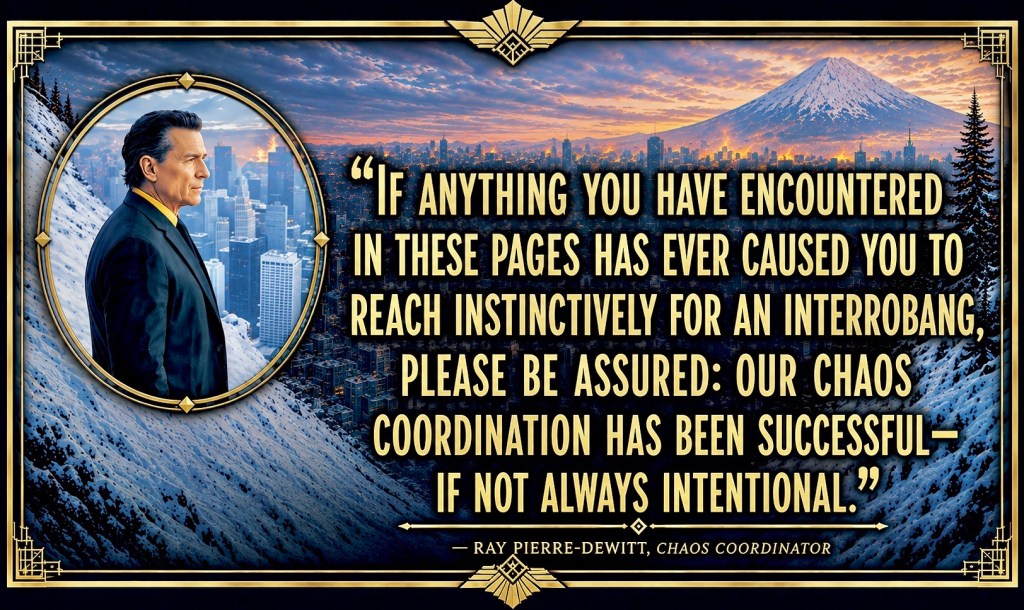
More WORDS IN THE WILD Can be found: HERE
POSTSCRIPT: Mrs. Begonia has since been informed that the interrobang remains very much alive in contemporary spoken English. It is generally pronounced: “Wait. What‽”


Leave a Reply