—A WORDS IN THE WILD INSTALLMENT—

With Guest correspondent:
Libby D’Annous, Planet Parenthood
There are words one encounters once and thereafter seems to encounter everywhere. Doula has lately been such a word.
A doula, I learned, is a non-medical companion trained to provide practical, informational and emotional support through childbirth and its aftermath. The word itself comes to us from the Greek for a woman servant—a remarkably old name for what has become a distinctly modern occupation.
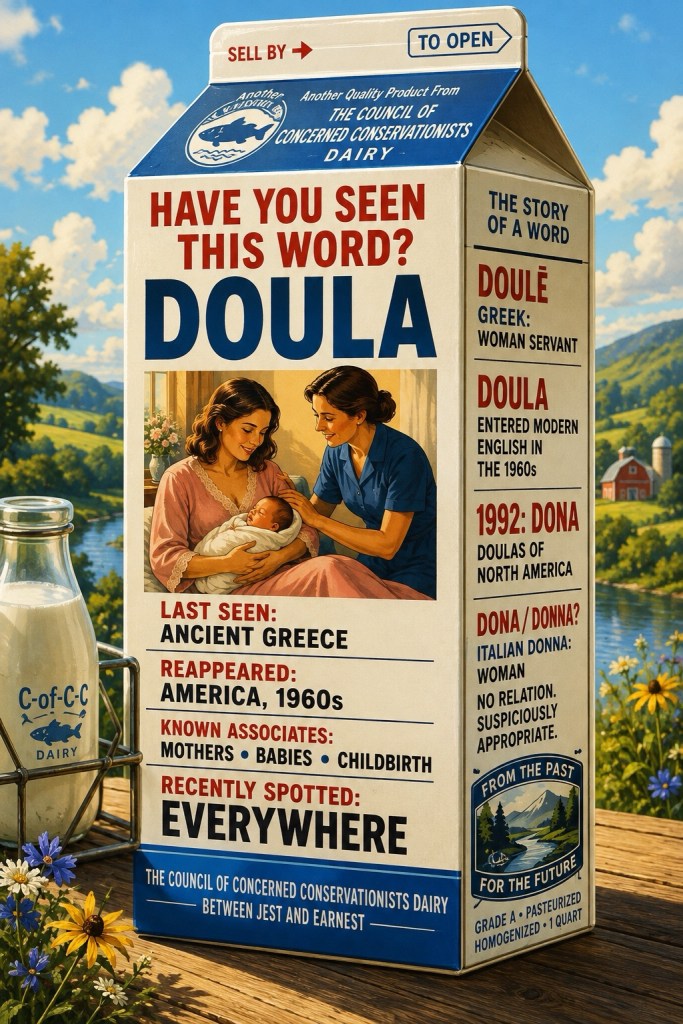
But the more I considered what a doula actually does, the less modern the occupation began to seem.
Perhaps the word had wandered into the wild because something else had wandered out.

The Doula
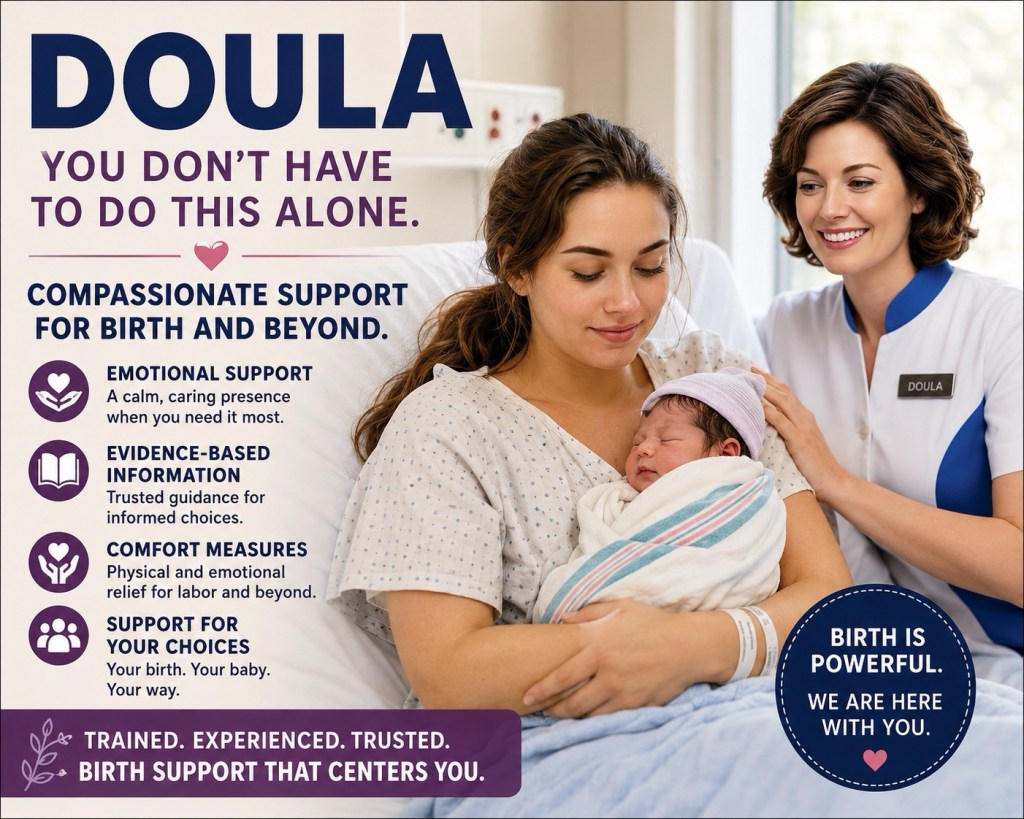
There is nothing particularly novel about a woman helping another woman through childbirth. What is novel is that we have given her a professional title, training, perhaps certification, and an invoice.
This is not necessarily a bad development. That somebody’s grandmother once did the work for nothing does not mean the work was worth nothing.
What interested me was not that we had invented the doula. It was that we had apparently found it necessary to reinvent her.
THE VILLAGE, À LA CARTE

I had seen this organization before, although its members possessed fewer certificates.
They were called mothers, sisters, aunts, grandmothers, neighbors and friends.
One should not sentimentalize the arrangement. Much of this work fell upon women simply because they were experienced women, and very little of it appeared on a balance sheet. There is something decidedly reasonable about recognizing caregiving as skilled work and compensating the person who performs it.
Still, something remarkable has occurred. The village has not entirely disappeared.
It has been unbundled.
TEEN DOULA™
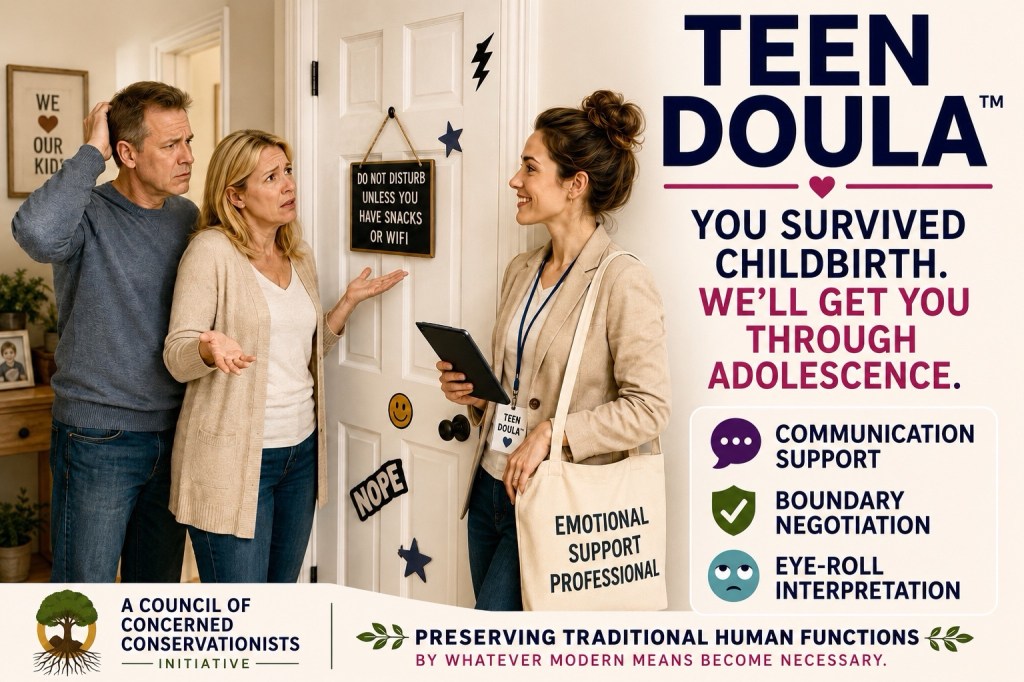
Once I had accepted the principle, I could see no obvious reason to confine it to childbirth.
Adolescence is also a difficult human transition. Indeed, parents who navigated labor without professional assistance may consider labor the easier of the two.
Why should there not be a Teen Doula?
At approximately this point I began having trouble determining where the doula ended and the concierge began.
I therefore continued my inquiry.
ADULT-CHILD DOULA

The Adult-Child Doula proved particularly difficult to dismiss.
She calls on Sunday. She visits. She asks whether you have eaten. She listens patiently to the story she heard last Sunday. She notices when something is wrong.
And if an elderly person is lonely, it seems rather cruel to insist that professional companionship cannot help merely because familial companionship would have been preferable. Yet the development marked an important threshold.
We had begun by hiring people to perform services once provided by relatives.
We were approaching the point at which we might hire people to perform the relatives.

Inevitably, someone noticed that the arrangement was unfair. Parents had been selecting childcare providers for generations, while children remained saddled with whatever parents happened to have been issued at birth.
ParentDash corrected this ancient inequality. Children could now select parental support according to temperament, interests, availability and desired degree of supervision. Premium subscribers could add grandparents, cousins and one mildly disreputable uncle for holidays.
The family had finally entered the concierge economy. And having arrived there, it immediately began reconstructing itself.
SOMEBODY BESIDE THE BED
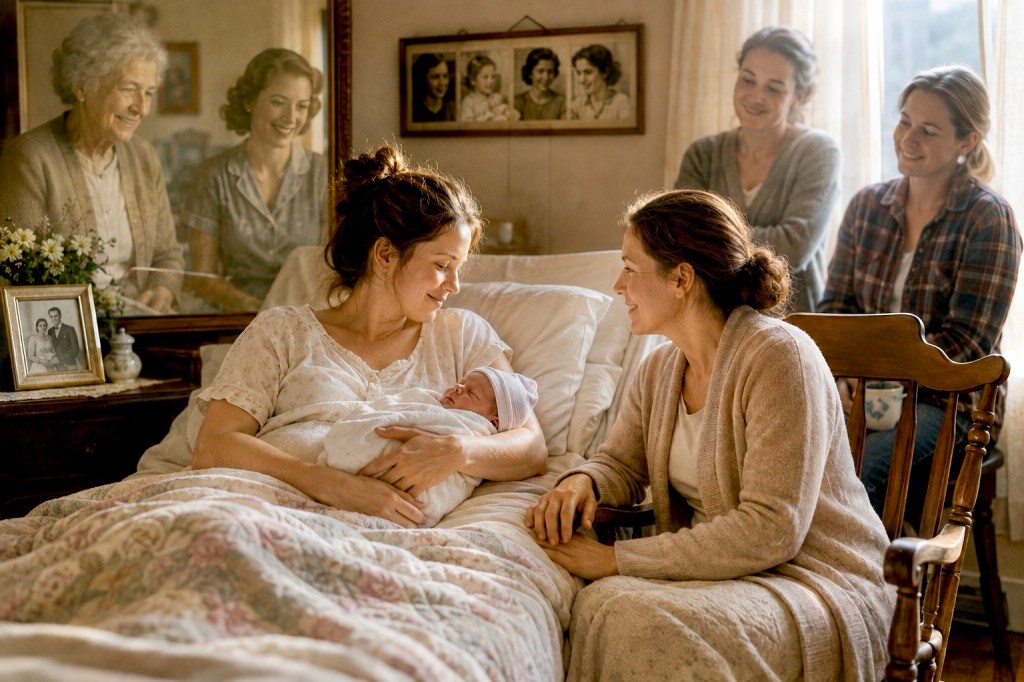
And here my little excursion into the future brought me unexpectedly back to the beginning.
Perhaps the doula is not evidence that tradition has vanished.
Perhaps she is evidence of how extraordinarily difficult tradition is to kill.
Remove the grandmother, scatter the aunts, move the sisters three states away, lose touch with the neighbors—and eventually somebody will have to sit beside the bed again.
We may give her a Greek name. We may train her, certify her, schedule her through an app and pay her by the hour.
But there she is.
The old form may disappear while the human need that created it remains stubbornly alive. And when that need becomes strong enough, we seem remarkably adept at inventing new forms in which to carry it forward.
Perhaps that is what conservation sometimes means: not preserving yesterday intact, but recognizing what remains worth preserving in the moment.
I had gone looking for a fashionable new occupation.
Instead, I found somebody sitting in a very old chair.
It seems the village has excellent survival instincts.
— Libby D’Annous
Planet Parenthood
AFTERWORD: THE ENTITY PREVIOUSLY KNOWN AS DOULA
JOHN ST. EVOLA, Editor:
Before becoming properly aware of the word doula, I had encountered it several times in passing and somehow concluded that it was Hindu, or possibly occult. A doula, I imagined, was some manner of supernatural being one might encounter halfway through a particularly complicated cosmology.
I was, of course, entirely wrong. . . Or perhaps only mostly wrong.
Libby’s inquiry suggests that there is something rather stranger going on here than the appearance of another modern occupation. A woman gives birth because another woman once gave birth to her, who did so because another woman gave birth to her, and so on backward beyond anyone’s ability to name the participants. Meanwhile, the infant in the bed represents the possibility of the same procession continuing forward.
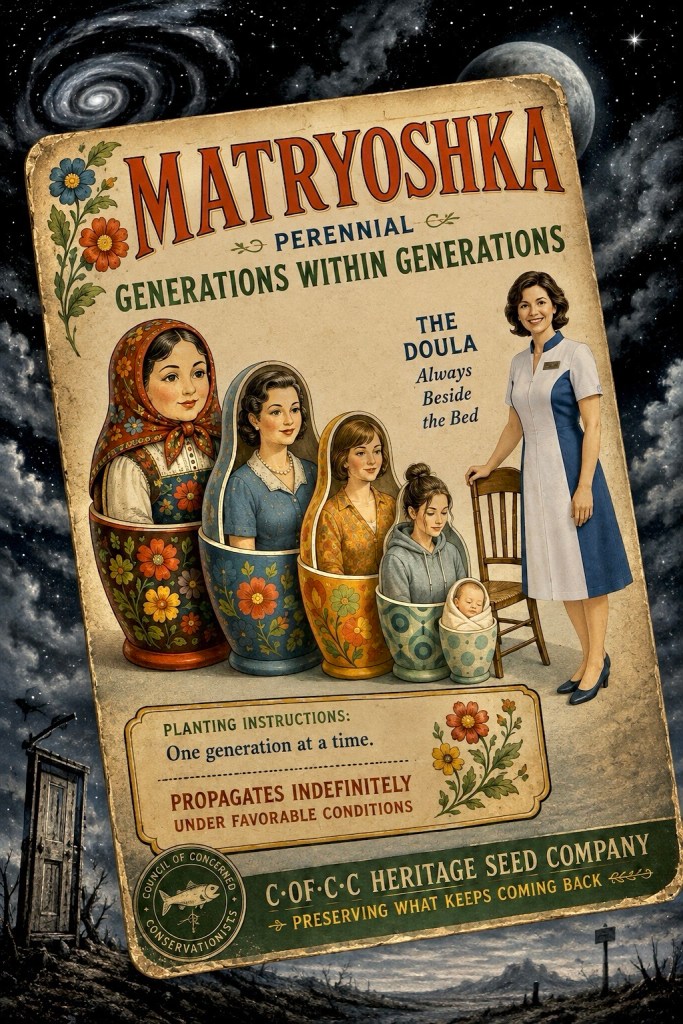
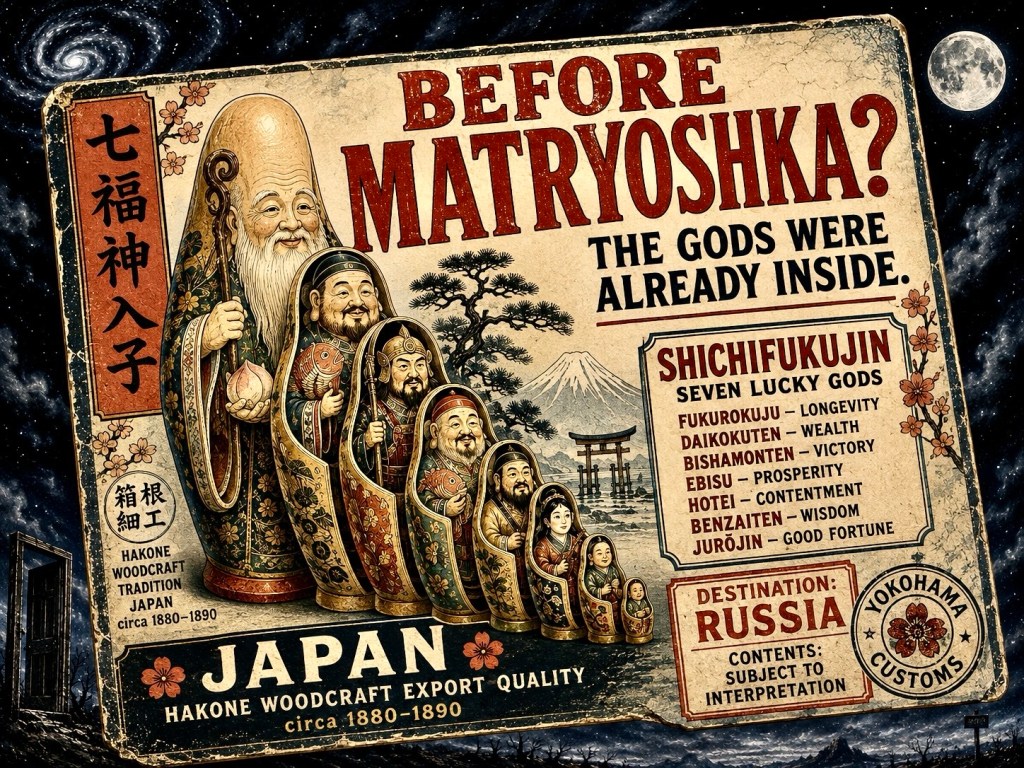
It is Libby’s matryoshka doll again: life nested inside life, generation inside generation, each one briefly occupying the present.
And beside this procession, apparently, somebody has very often been standing to help: grandmother, mother, sister, aunt, neighbor, friend, midwife—and now, doula.
The names and arrangements change. The peculiar human requirement that somebody be there does not.
So I withdraw the Hindu part. . . The supernatural part, however, I am keeping.
For what else are we to call a figure who keeps appearing beside the bed, generation after generation, whenever one human being is engaged in the rather extraordinary business of bringing another into the world?
The apparition changes its name and costume, but apparently refuses to leave.
The doula is a supernatural being.
The paystub may simply be a sign of the times.
— John St. Evola, Editor
More Words In The Wild can be found: HERE


Leave a Reply